
A bread pan may look simple when it is sitting on a workbench. Its job becomes more demanding once it enters an automated production line. The same assembly must move through repeated loading, baking, depanning and return handling while remaining compatible with the equipment around it.
Most of the bread molds we make are built for automated bakery lines. That is why we consider the frame and the baking surface together. A suitable coating cannot compensate for a poorly matched structure, and a strong frame still needs a release surface suited to the product.
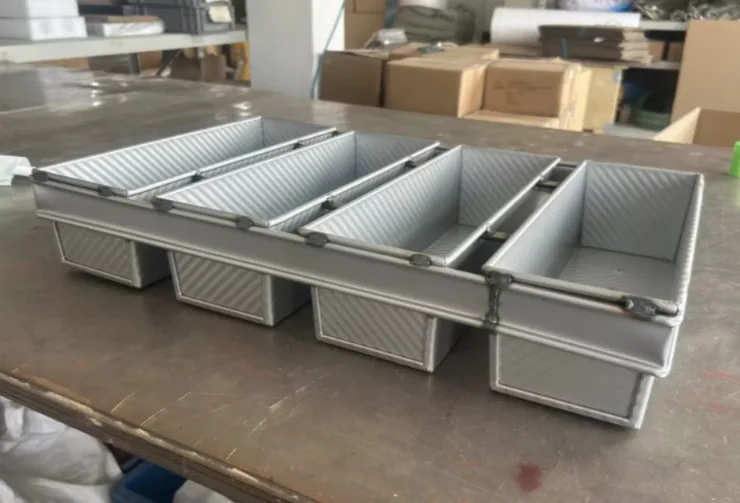
Why a double-frame construction
Our double-frame design adds reinforcement beyond a conventional single-frame arrangement. The aim is greater rigidity: helping the connected tins retain their intended position and shape through repeated handling in daily production.
Frame count is only one part of the specification. Rail dimensions, material thickness, joint design and the position of the connections also need attention. We review these details alongside the overall pan dimensions and the way the line supports, lifts or transfers the assembly.
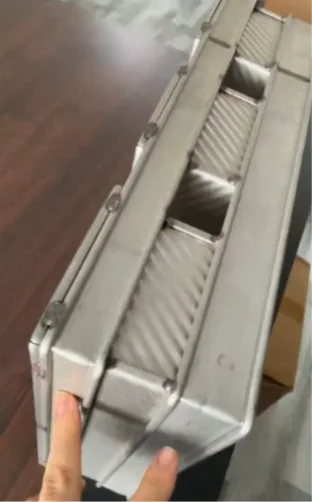
A useful product photograph should let a buyer inspect more than the overall shape. Side views and close-ups help show how the frame meets the tins and where the assembly is joined. Review these details alongside the technical drawing, especially where the pan connects with conveyors, lifting equipment or depanning systems. Photographs help explain the construction; agreed drawings establish the dimensions and tolerances.
A release surface chosen for the job
Structure supports the pan assembly; the coating supports the release process. PFA, short for perfluoroalkoxy, is used in industrial non-stick coating systems, including bakeware applications. The coating specification should be selected for the actual baking and maintenance conditions.
Our PFA non-stick coating is specified for at least 3,000 baking cycles with proper use and maintenance. When discussing a project, we look at the intended recipe, baking conditions, depanning method and cleaning routine so that expectations are tied to the way the pans will be used. Actual service life depends on the application and operating conditions.
A cycle count is most useful when its conditions are understood. Ask about the applicable coating system, recommended care and how release performance will be assessed for your bread. This makes the specification more useful than a general comparison with an undefined “standard coating.” For a broader view of finish options, see our baking pan coating selection guide.
Start with the line, then define the pan
A custom bread pan project should begin with the product and equipment requirements. An existing sample or drawing is a helpful starting point, particularly when the new assembly must fit an established production line. Our custom baking pan manufacturing page explains what to include in your specification.
| Requirement | What to share |
|---|---|
| Loaf and tin size | Required internal dimensions, loaf shape and whether a lid is needed. |
| Assembly layout | Number of tins, spacing, overall dimensions and frame clearance. |
| Line interface | How the assembly is supported, conveyed, lifted and depanned. |
| Baking process | Recipe type, typical baking temperature and time, and daily production schedule. |
| Surface and care | Coating requirements, release method and the cleaning process used on site. |
These details help define a pan assembly that belongs in your process. Before ordering a production quantity, agree on the drawings, relevant dimensions, coating specification and sample evaluation requirements. For a related connected-pan format, review the 3-Strap Loaf Pan or the 500g 5-Strap Bread Pan with Lid; each is a separate model with its own confirmed specifications.
Make maintenance part of the specification
Care instructions should accompany the selected coating system. Confirm the permitted operating conditions, cleaning tools, cleaning agents and handling methods with the supplier. A routine that suits one coating should not automatically be applied to another.
It is also useful to keep a simple record of cycles, release quality and visible wear. That record gives your bakery and the pan supplier a clearer basis for discussing service life, maintenance or replacement.
Questions worth asking before an order
Does every automated bakery need the same frame?
No. The right construction depends on the assembly size and the line’s handling requirements. Double-frame reinforcement should be considered as part of the full design, together with materials, joints and equipment clearances.
Does a PFA coating name alone establish its cycle life?
No. The selected coating system and the conditions of use matter. The 3,000-cycle specification should be discussed against your application, with the operating and maintenance conditions agreed for the project.
What is the best way to start a custom enquiry?
Send your drawing or sample, the required tin dimensions and photographs of the relevant handling points on your line. Include the baking and cleaning conditions so the structure and coating can be reviewed together.