Industrial loaf tins help bakeries produce consistent sandwich bread and sliced loaves while keeping pans moving through mixing-room operations, proofing, baking and depanning. Their performance depends on more than cavity size: construction, material, coating, perforations and frame design all affect how a tin works in daily production.
This guide explains the main options and the specifications to discuss with a bakeware manufacturer when selecting or developing loaf tins for your bakery.
Single Loaf Tins and Strapped Sets
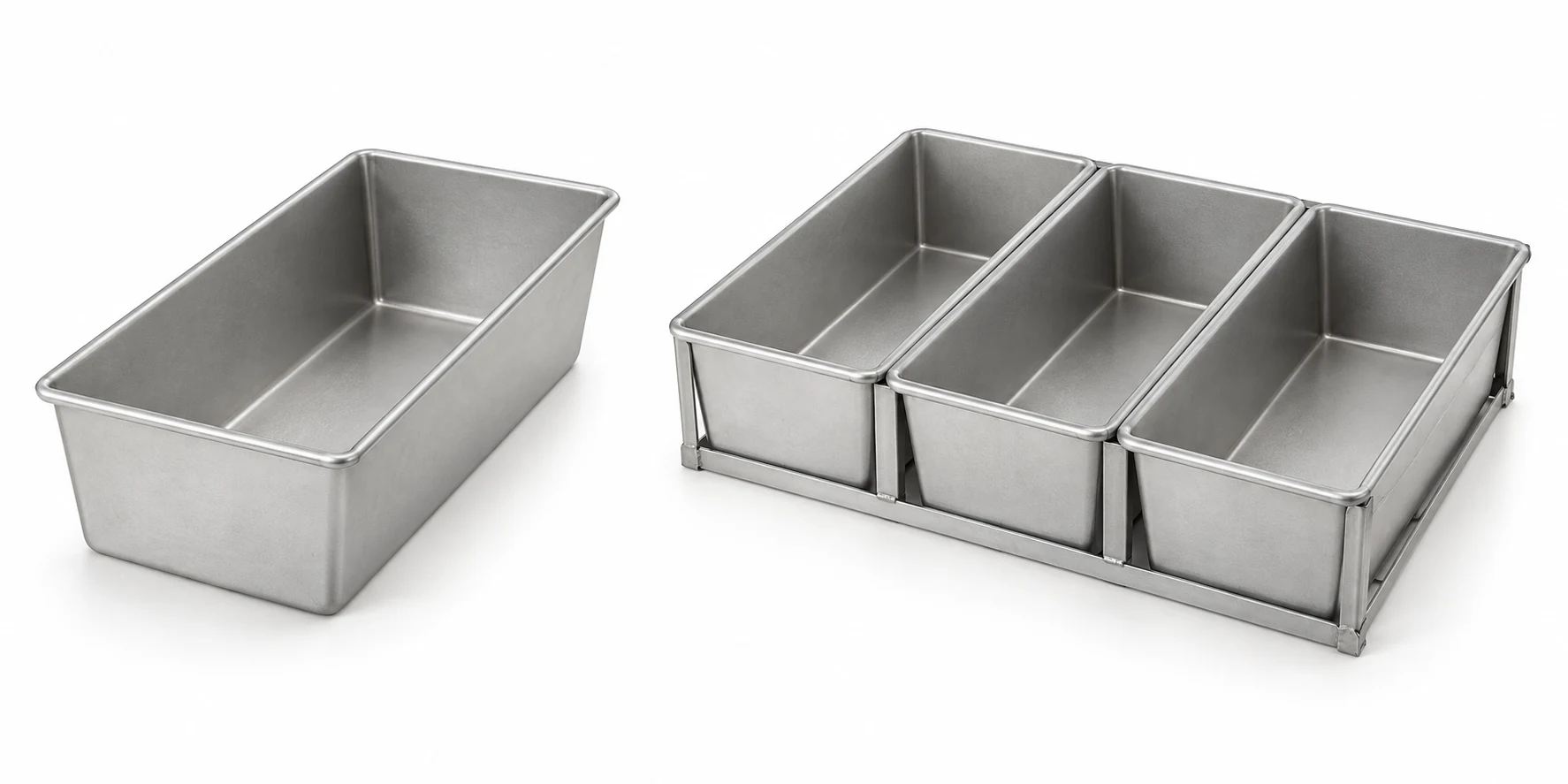
Single loaf tins can be handled and replaced individually, making them useful for bakeries that change product sizes frequently. Automated handling may require a separate carrier or positioning system.
Strapped loaf tin sets connect several cavities with straps or a frame so they can move through production as one unit. Three-, four- and five-pan sets are examples; cavity count and arrangement should suit the oven, conveyor and depanning equipment.
For a strapped set, specify both the individual cavity dimensions and the complete assembly. Cavity spacing, overall dimensions, support surfaces and frame connections determine how the set fits the line. Gaps between cavities also matter where airflow and cleaning access are concerned.
Three Main Types of Loaf Tin Construction
Seamless drawn, folded and welded constructions offer different ways to form and join a metal loaf tin. The appropriate choice depends on cavity geometry, material, tooling requirements and production volume.
Seamless Drawn Loaf Tins
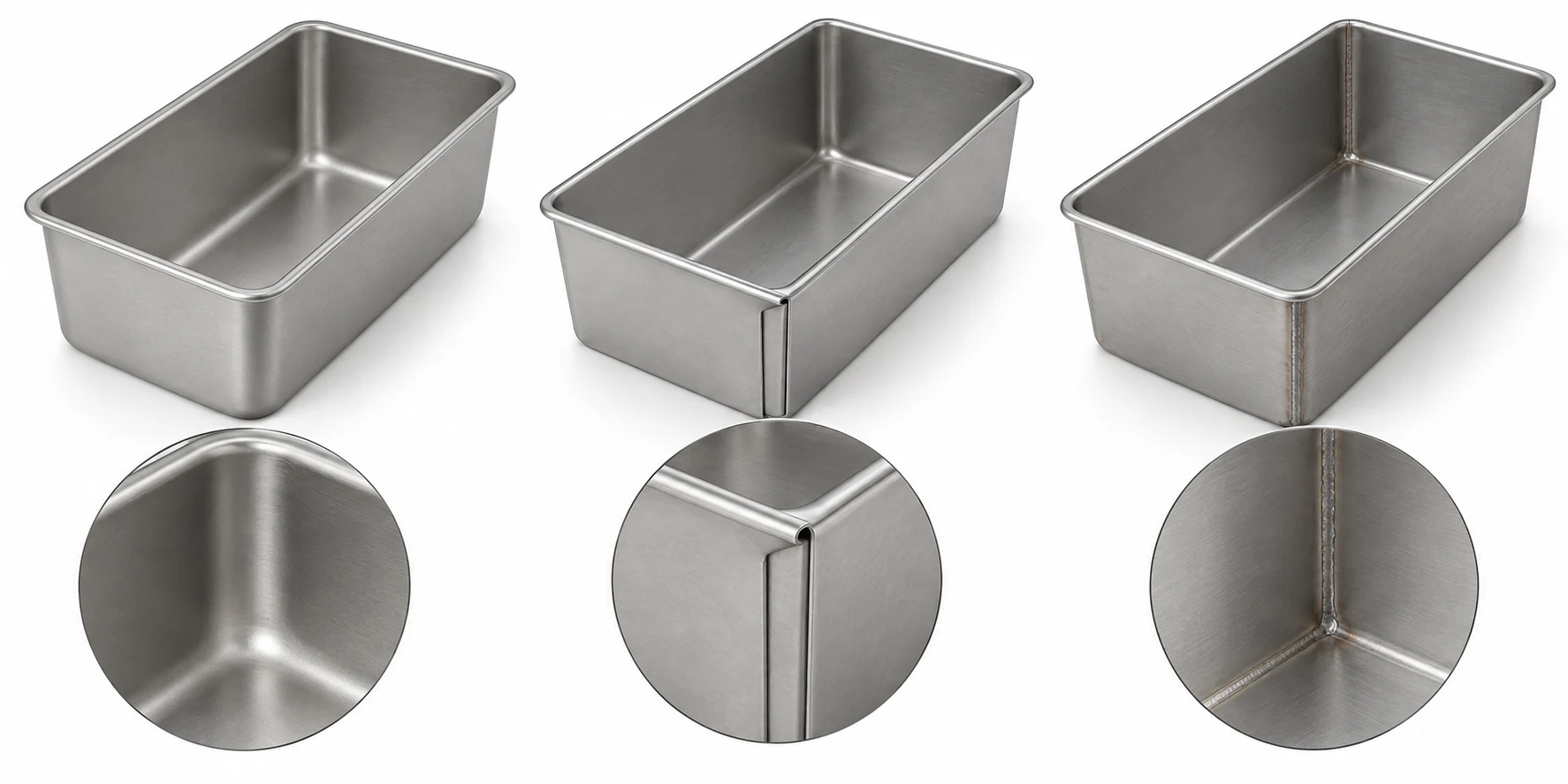
A seamless drawn tin is formed from a single sheet, creating a continuous base and sidewalls without joining seams in the main cavity. Smooth internal corners reduce the number of joints where baking residue can collect and help simplify cleaning.
Tooling must account for draw depth, corner radii, material formability and wall thickness distribution. Deep, narrow cavities or small corner radii may require additional development. Seamless construction does not necessarily mean the tin is made in one press operation.
Folded Loaf Tins
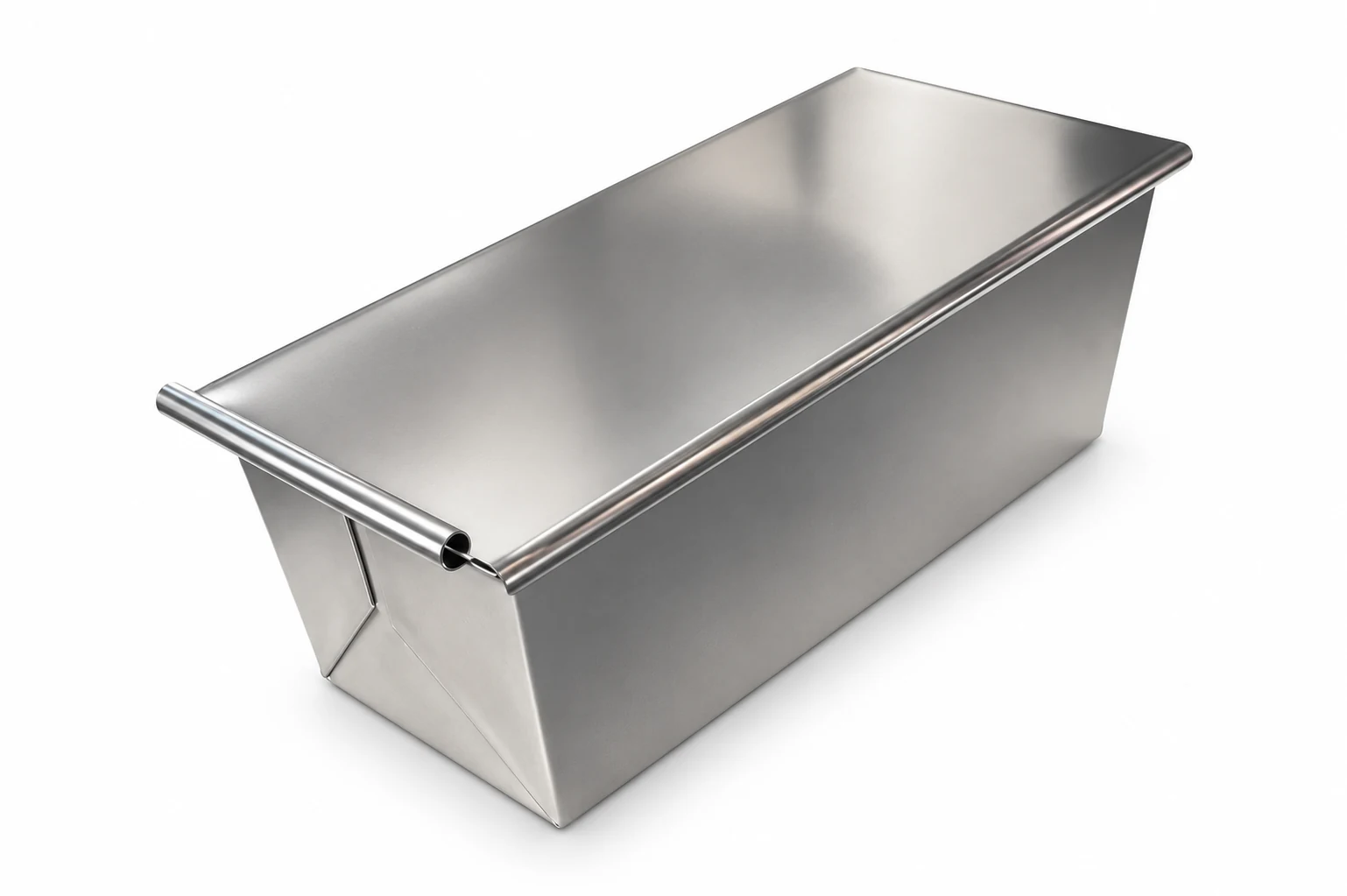
Folded tins are made by bending sheet metal and forming folded, overlapping or interlocking joints at the ends or corners. The end folds shown above are a visible feature of this construction.
When specifying a folded tin, confirm joint locations, fold details, the finish of food-contact surfaces and any additional seam treatment. For sliding lids, the rim and guide geometry must also allow smooth operation when the assembly is hot.
Welded Loaf Tins
Welded tins use welding to join formed sections or close seams. Important manufacturing considerations include weld continuity, distortion control, surface finish and treatment of the joining area before subsequent coating.
Cavity construction and frame assembly should be specified separately. A seamless cavity may be welded to an outer frame, while a folded body may also include local welds. Describing the cavity, seam treatment and frame connections individually makes quotations and drawing approval clearer.
Plain and Corrugated Walls
Plain loaf tins provide a relatively smooth forming surface. Corrugated loaf tins incorporate ribs or grooves that can modify local panel stiffness and may leave a corresponding pattern on the loaf.
Corrugation direction, depth and coverage should suit the cavity design and desired bread appearance. Baking and release performance should be checked using the actual dough and process. Corrugations and perforations are separate features and can be specified independently or together.
Solid and Perforated Loaf Tins
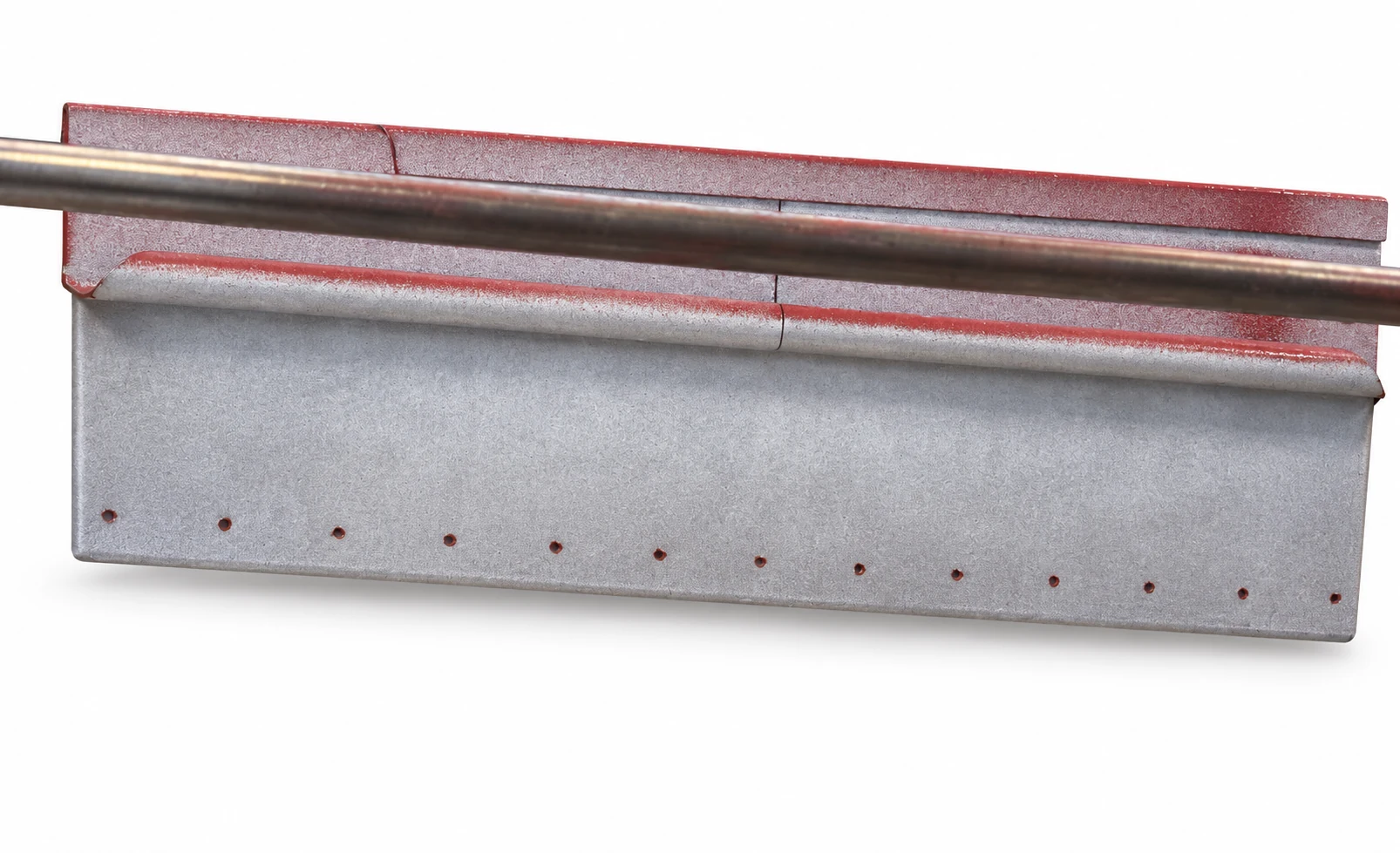
Perforations provide local paths for gas and moisture exchange. Their effect depends on hole location, diameter, number and open area. A few small vent holes should therefore be distinguished from a densely perforated surface.
| Configuration | Design feature | Selection considerations |
|---|---|---|
| Solid | Continuous base and sidewalls | Crust requirements, coating and depanning method |
| Bottom-perforated | Holes in the base | Hole size, bottom-crust results and obstruction by support surfaces |
| Side-perforated | Holes in the sidewalls | Cavity spacing, frame obstruction and side-crust results |
| Base and sidewall perforations | Holes distributed across both areas | Open area, rigidity, surface marks and cleaning access |
Bottom and sidewall holes act in different regions, but perforations alone do not guarantee a crisper crust or easier release. Dough hydration, oven airflow, baking conditions and blocked openings all influence the result. Sample trials should check for dough entering holes, visible marks on the loaf and residue remaining after depanning.
Materials, Thickness and Surface Treatments
Aluminized steel has a steel substrate with an aluminum or aluminum-alloy coating. Aluminum alloy is a different base material. For the same geometry and thickness, aluminum alloy is generally lighter and conducts heat more readily, while steel has a higher elastic modulus. Finished-pan weight and resistance to deformation also depend on thickness, reinforced rims and frame design.
Specify thickness by component rather than assigning one value to the entire assembly. Cavity sheets, straps, frames and lids may use different thicknesses. Increasing thickness changes stiffness, weight and thermal mass, so it should be assessed against handling loads and baking requirements.
Surface options include uncoated surfaces, silicone-based release coatings and fluoropolymer non-stick coatings. Aluminum may also receive an anodized finish, which should be distinguished from an organic non-stick coating.
Coating selection should reflect the dough formulation, baking conditions, release method, cleaning procedures and maintenance plan. Color alone cannot identify a coating system. Ask for the specific coating designation and its intended operating conditions.
Matching Loaf Tins with Lids
Open-top baking allows the dough to develop a crowned top. Lidded baking constrains expansion to help form a flatter loaf profile. Common lid arrangements include weighted or drop-on lids, hook or latch-type lids, and sliding lids.
A weighted lid requires suitable seating and mass. A latch-type lid needs compatible engagement points and clearance for unlocking. A sliding lid requires controlled guide clearances and enough space for withdrawal. The lid and tin should be checked together under both cold and hot operating conditions.
How to Specify Industrial Loaf Tins for Your Production Line
Begin with the intended loaf: its dimensions, dough piece weight, top profile and crust requirements. Then define the cavity and assembly around the equipment. A nominal loaf-weight rating is not a substitute for dimensions; tins intended for the same weight can have different proportions and capacities.
| Specification | Information to provide |
|---|---|
| Product and process | Bread type, dough piece weight, target loaf size, proofing and baking conditions |
| Cavity geometry | Top and base dimensions, depth and corner radii; identify internal or external measurements |
| Assembly and frame | Cavity count, arrangement, center spacing, overall dimensions, support and locating points |
| Construction and finish | Forming method, material, component thicknesses, wall texture, perforations and coating |
| Lids and equipment | Lid type, opening direction, conveying, stacking and depanning requirements |
Sample approval should cover lid operation, baking, depanning and cleaning. Check bread appearance and release alongside frame distortion, joint condition, coating wear and equipment interference. Keep dough formulation, piece weight, proofing and baking conditions consistent when comparing samples.
Planning a Custom Loaf Tin Project
A suitable loaf tin supports consistent bread shape, reliable handling and practical maintenance. For a new project or replacement set, prepare dimensioned drawings, photographs of existing pans, equipment interface details and the issues you want to improve.
Discuss these requirements with your bakeware manufacturer before confirming the design. Clear specifications and production trials help establish a loaf tin configuration that fits both your bread and your line.
Image note: the folded and perforated examples are based on supplied photographs edited to a white background. The single/strapped, seamless and welded images are AI-generated concept illustrations. Images are for explanation; dimensions and construction details must follow approved drawings and samples.